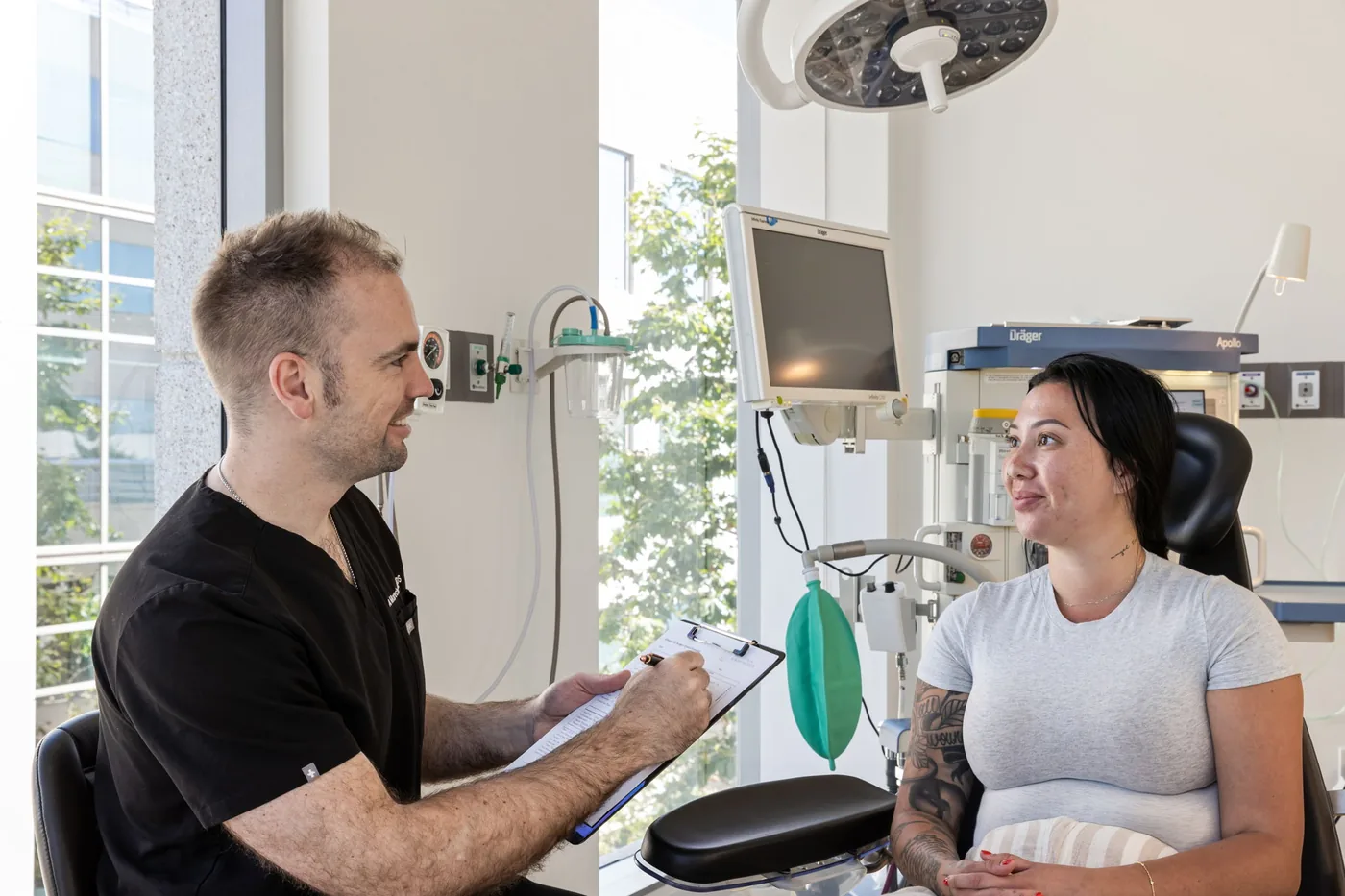
Wisdom Teeth
Wisdom teeth, or third molars, are the last teeth to develop and usually emerge between the ages of 17 and 25. When there is not enough room for them to erupt properly, they can cause pain, infection and damage to neighbouring teeth.
Why removal is recommended
- Impaction: the tooth cannot fully emerge because there is not enough room, causing pain, swelling, infection and damage to adjacent teeth.
- Partial eruption: food and bacteria collect around the tooth, leading to recurrent infection.
- Crowding: erupting wisdom teeth can push against other teeth, affecting alignment and making cleaning difficult.
- Cysts or tumors can form around wisdom teeth and damage the jawbone if left untreated (see Pathology).


Timing
Surgery and recovery are generally easier when wisdom teeth are removed at a younger age and before problems develop. Your surgeon will examine the teeth and jaw to determine whether removal is necessary. In younger patients the roots are still forming and the surrounding bone is less dense, which usually makes removal simpler and healing quicker. An evaluation in the late teens, often around age 16 to 20, allows the teeth to be monitored on X-rays and removed, if needed, before they affect neighbouring teeth.
Anesthesia
Wisdom tooth removal is usually performed under IV sedation or general anesthesia, so you are asleep during the procedure. Local anesthesia is also available. See Anesthesia & Sedation and the pre-operative instructions.
Recovery
- Change gauze as needed; bleeding should subside within about 24 hours.
- Keep your head elevated, use ice on the cheek for the first 24 hours, then warm compresses if desired.
- Eat soft foods and avoid straws, which can dislodge the blood clot.
- Rest, and avoid strenuous activity for at least a week.
Risks
As with any surgery, there are risks, including pain and swelling, prolonged bleeding and dry socket. Rarer complications include persistent numbness, jaw fracture and opening of the sinus. If numbness persists after surgery, early evaluation matters — see Trigeminal Nerve Repair.
Frequently asked questions
What are the symptoms of an impacted wisdom tooth?
Pain and swelling of the gum over the tooth, bad breath or taste from infection, tenderness when eating or talking, and sometimes an earache.
How long is recovery?
Most patients feel much better after a few days; over-the-counter pain medication is usually sufficient in the first days.
Does insurance cover wisdom tooth removal?
Wisdom tooth removal is usually billed to dental insurance. We are in network with most dental PPO plans, and our team will review your benefits with you before treatment.
At what age should wisdom teeth be evaluated?
An evaluation is usually recommended in the late teens, around age 16 to 20. At that stage the roots are not yet fully formed, and X-rays show whether the teeth have room to erupt or are likely to cause problems later.
Do all wisdom teeth need to be removed?
No. Wisdom teeth that are healthy, fully erupted, correctly positioned and easy to keep clean can often stay. They are then monitored at regular dental visits.
Your surgeons
Both surgeons provide the full range of oral surgery.

Youn Sagong, DDS
Oral and maxillofacial surgeon. Board-certified by the American Board of Oral and Maxillofacial Surgery. Residency and chief residency, Yale. Assistant Clinical Professor, UCI Medical Center; operating privileges at Hoag Hospital and UCI Medical Center.
Wisdom teeth, extractions, dental implants and bone grafting.
Surgeon profile →
Andrei Marechek, MD, DDS
Oral and maxillofacial surgeon. Board-certified by the American Board of Oral and Maxillofacial Surgery. Residency, Case Western Reserve University. Assistant Clinical Professor, UCI Medical Center; operating privileges at Hoag Hospital and UCI Medical Center.
Wisdom teeth, extractions, dental implants and bone grafting.
Surgeon profile →Performed by surgeons whose practice also includes corrective jaw surgery, TMJ surgery, reconstruction and facial aesthetic surgery.