

- Difficulty biting or chewing
- Facial asymmetry or imbalance
- Open bite, where the upper and lower teeth don’t meet when the mouth is closed
- Protrusion or retrusion of the upper or lower jaw
- Sleep apnea caused by jaw misalignment
- Chronic jaw or facial pain
The surgery is typically performed by an oral and maxillofacial surgeon and is often done in conjunction with an orthodontist. The procedure is usually planned after a comprehensive evaluation, including radiographic and photographic records, study models, and oral examination.
What to Expect at Your Initial Consultation
Your transformation begins with a streamlined, comprehensive consultation at the Maxillo-Facial Surgery Institute. We understand that exploring jaw surgery can feel overwhelming, so we focus on giving you complete clarity from day one.
If you are ready to explore surgery, we gather all necessary diagnostic records during your initial visit to map out your care efficiently:
- Digital Intraoral Scans: We capture a precise digital 3D model of your teeth, completely replacing uncomfortable, messy traditional dental molds.
- Advanced 3D CBCT Scan: A low-radiation Cone Beam Computed Tomography scan provides high-resolution, three-dimensional views of your underlying bone structure, nerve pathways, and airway.
- Clinical Photography & Facial Measurements: We take comprehensive structural photos and measurements to evaluate your facial symmetry and balance from every angle.
- Surgical & Insurance Discussion: Our team sits down with you to review your diagnostic results, outline your customized surgical options, and walk you through the insurance pre-authorization process to maximize your coverage benefits.
How We Use Technology to Customize Your Surgery
Modern jaw surgery relies on exceptional digital precision. By utilizing a fully digital workflow, our surgeons eliminate guesswork and plan your entire procedure before you ever enter the operating room.
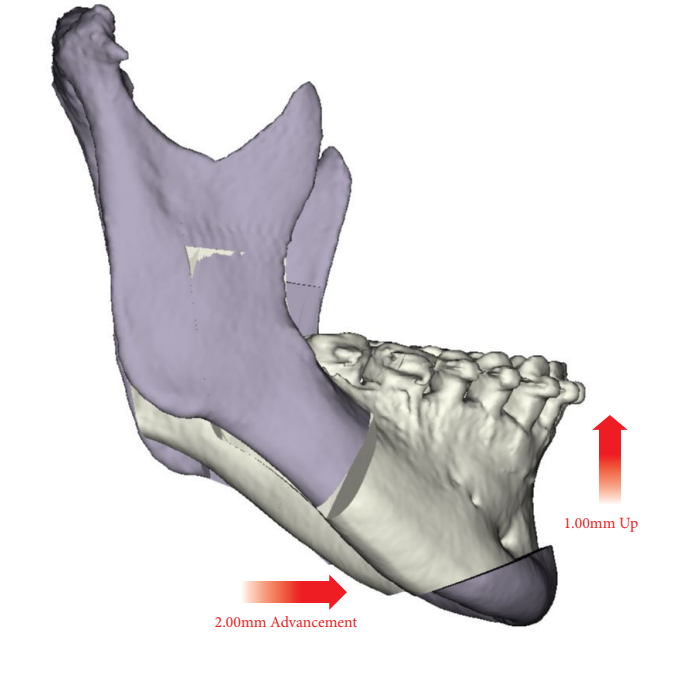
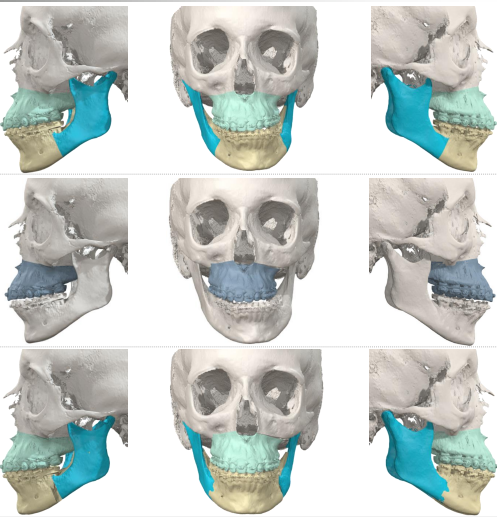
- Virtual Surgical Planning (VSP): Using specialized software and your 3D CBCT data, we construct a digital avatar of your skull. Our surgeons perform your entire procedure virtually on-screen, allowing us to visualize bone movements down to a fraction of a millimeter.
- CAD/CAM Custom Plates & 3D-Printed Guides: Based on your virtual plan, we 3D-print physical surgical guides and custom-mill medical-grade titanium plates tailored exactly to your anatomy. This ensures a perfect fit, drastically reduces your time under general anesthesia, and minimizes surgical risks.
Orthodontic Options & Treatment Sequencing
Corrective jaw surgery is a collaborative process between our surgical team and your orthodontist. Because every smile and skeletal structure is unique, we support the alignment methods that best fit your lifestyle:
- Traditional Braces: The time-tested standard for complex alignment and major tooth movement, providing exceptional stability and control during your procedure.
- Clear Aligners (Invisalign®): You do not necessarily have to wear traditional metal braces to undergo jaw surgery. We routinely plan and execute orthognathic surgery for patients using Invisalign, utilizing temporary, discreet tracking points to ensure absolute surgical precision.
Treatment Timelines
- The Standard Sequence (Orthodontics-First): For the vast majority of our patients, the safest and most predictable results are achieved by aligning the teeth via braces or Invisalign first (typically 12–18 months), performing the surgical correction, and finishing with a brief period of post-surgical orthodontic fine-tuning.
- Surgery-First Protocol: In highly specific, selective cases where your entry bite alignment permits, a “surgery-first” approach may be considered. This protocol addresses the skeletal discrepancy at the very beginning of treatment, leaving the orthodontic alignment to be completed entirely after surgery.
The Surgical Procedure: What to Expect
Orthognathic surgery can involve the upper jaw (maxilla), lower jaw (mandibular), or both (double jaw surgery).
- Completely Hidden Incisions: The entire procedure is performed safely inside the mouth. There are no external incisions made on your face, meaning you will have no visible facial scars.
- Anesthesia & Comfort: The surgery is performed under general anesthesia in a state-of-the-art surgical facility, ensuring you are entirely asleep and comfortable throughout the procedure.
Patient FAQs: Recovery & Typical Concerns
Will my jaws be wired shut?
No. We do not wire your jaws shut. This is a common myth based on outdated techniques. Instead, we secure your jaws firmly in their new positions using rigid internal fixation (our custom 3D-printed plates and screws). If any support is needed to guide your new bite post-operatively, we use light, flexible orthodontic elastics (rubber bands). You will still be able to open your mouth to speak, breathe, and maintain your oral hygiene.
What is the recovery timeline?
- Hospital Stay: Most patients spend one night in the hospital or surgical center for close monitoring and safely head home the following morning.
- Swelling and Stiffness: Swelling is a natural, expected part of healing. It peaks around day 3 or 4 and gradually subsides over the next 2 to 3 weeks.
- Diet: You will start on a full liquid diet immediately after surgery, transitioning to a soft, non-chew diet (such as scrambled eggs, pasta, or smoothies) for approximately 6 weeks while the bone completely heals.
- Returning to Work/School: Most patients feel ready to return to work or school within 2 weeks, depending on their baseline energy levels.
Schedule Your Orthognathic Consultation in Irvine
Corrective jaw surgery is a collaborative journey that transforms your health, function, and confidence. If you are ready to explore your options with a team utilizing the most advanced surgical technology in Orange County, contact the Maxillo-Facial Surgery Institute today to schedule your comprehensive evaluation.


