
Maxillomandibular Advancement (MMA) for Sleep Apnea: Airway Case
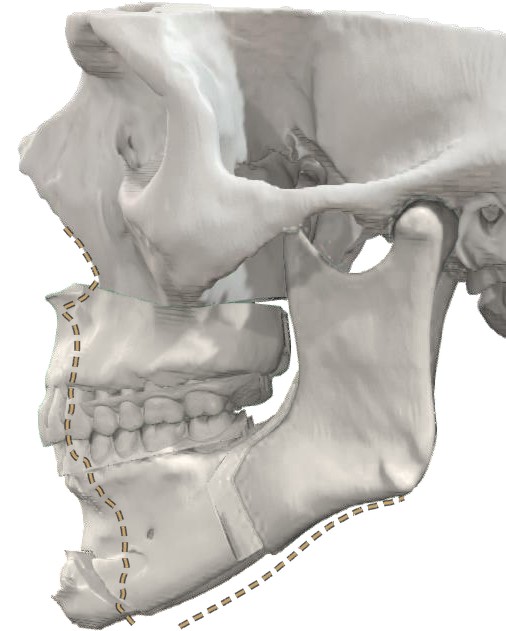
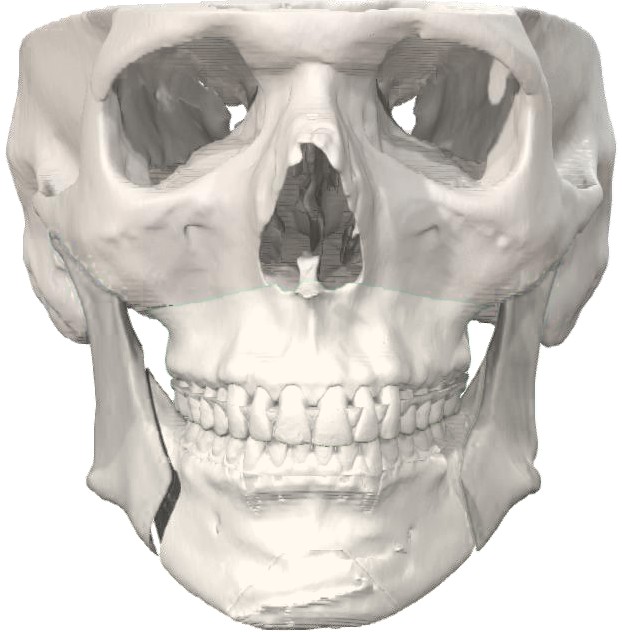
Maxillomandibular advancement (MMA) moves the upper and lower jaws forward together. The soft palate, tongue base and surrounding tissues are attached to these bones, so moving the jaws forward is intended to create more room in the upper airway behind them. This patient has obstructive sleep apnea and was unable to tolerate CPAP, despite prior nasal procedures. Treatment was advancement of both jaws with counterclockwise rotation, plus genioglossus advancement, planned on a 3D model from the CT scan. No pre-surgical orthodontics were needed. In the surgical plan, the maxilla (upper jaw) moves about 4.6 mm forward, the mandible (lower jaw) about 9.3 mm forward and the chin about 15.0 mm forward.
- Concern
- Obstructive sleep apnea (AHI 27.1) and a recessed jaw line; unable to tolerate CPAP despite prior nasal procedures
- Procedure
- Maxillomandibular advancement (Le Fort I and bilateral sagittal split osteotomies) plus genioglossus advancement
- Orthodontics
- No pre-surgical orthodontics were needed
- Planning
- 3D CT model, virtual surgical plan
- Treated at
- Maxillo-Facial Surgery Institute, Irvine
- Age
- 30s
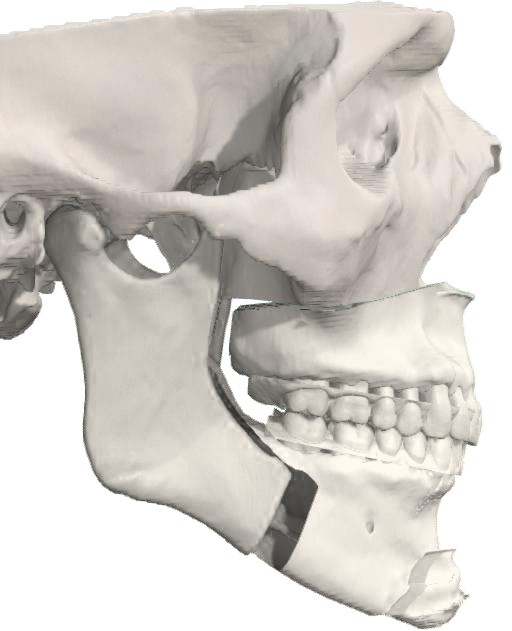
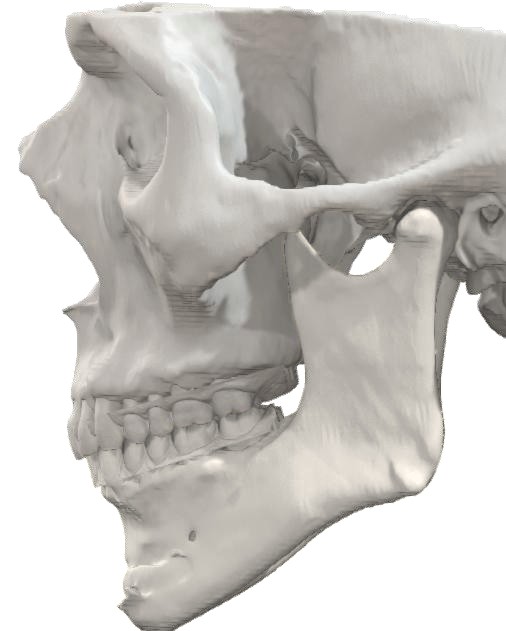
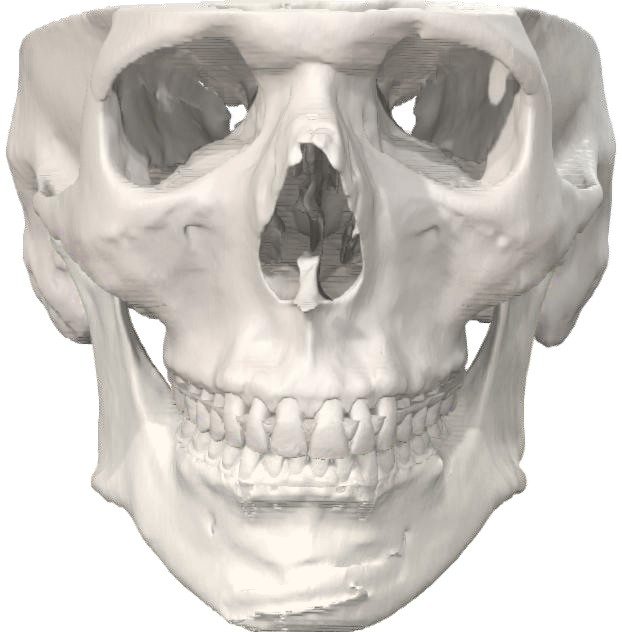
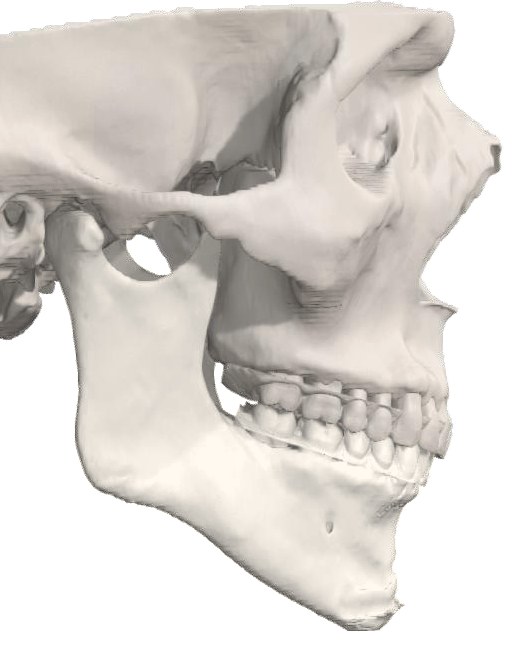 Before
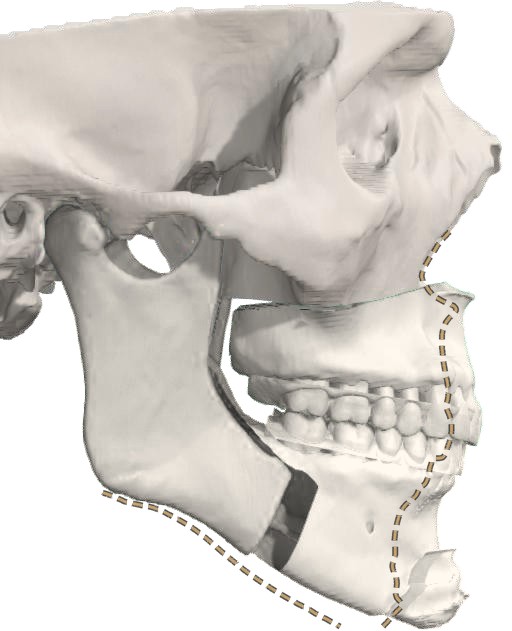
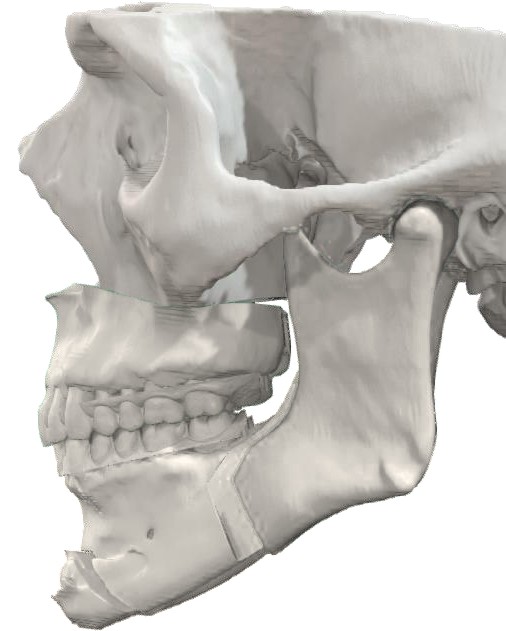
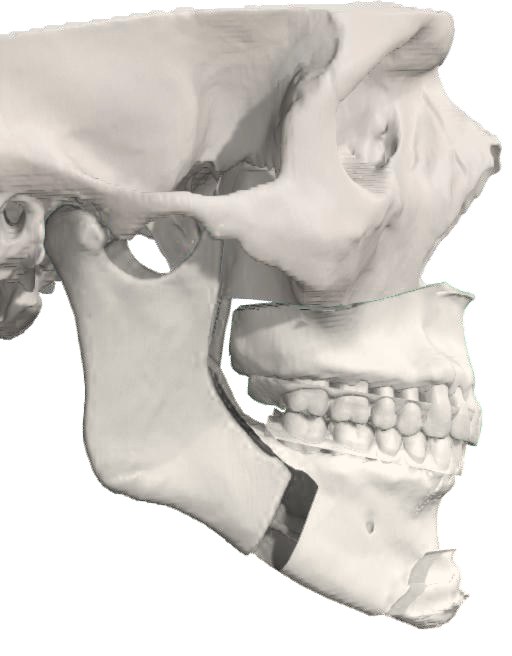 Planned
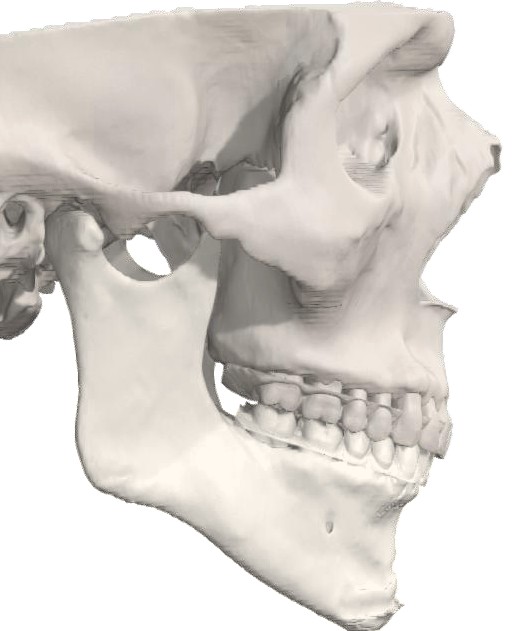
Before and planned
The 3D model before surgery and with the planned movements, at the same camera angle and scale. The upper jaw, lower jaw and chin are moved forward and the jaws are rotated counterclockwise. All values are planned values from the 3D surgical plan.
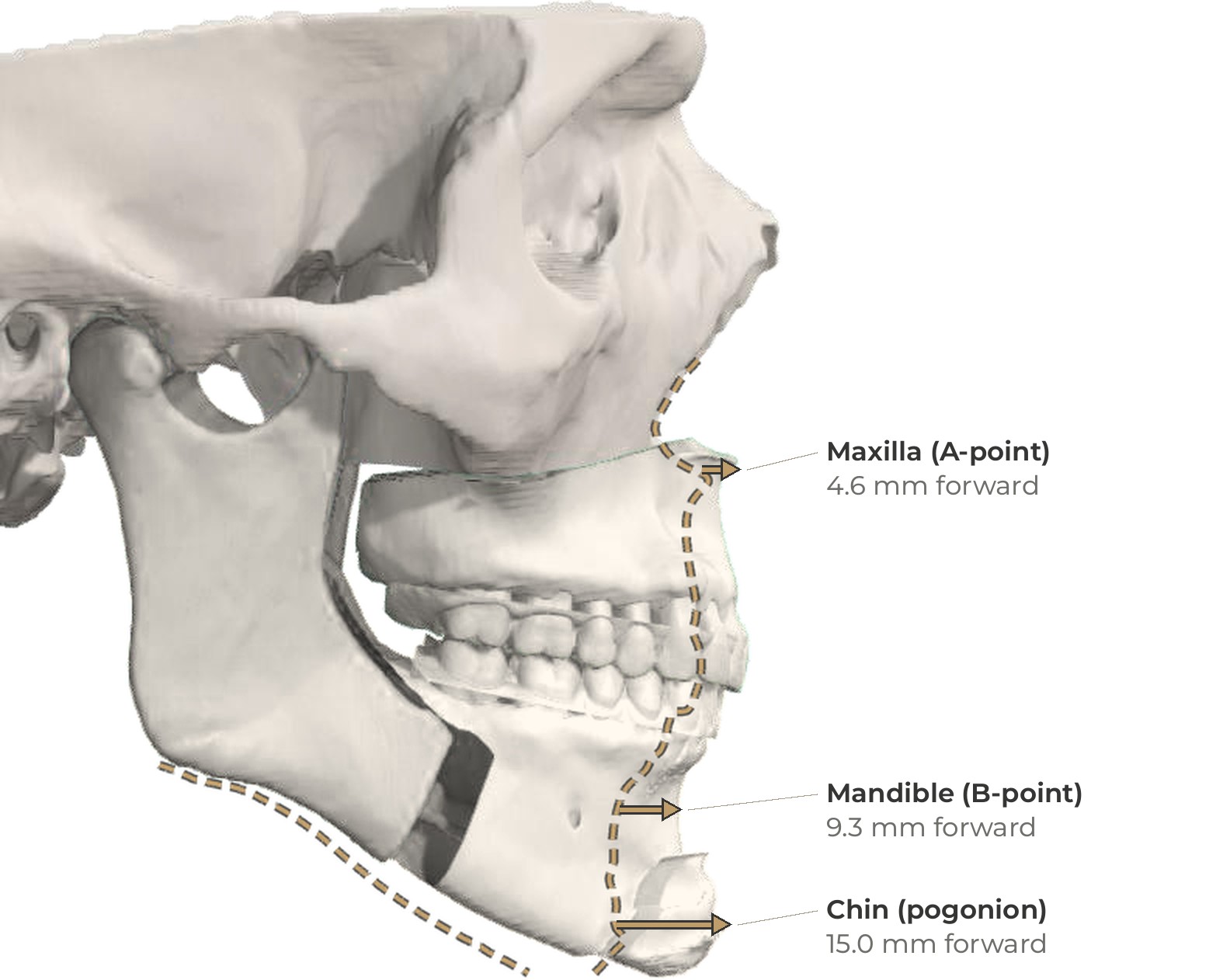
Right and left sides. The dashed gold line is the outline of the pre-op bone, traced from the pre-op 3D model in the same view and drawn over the planned model.
Diagnosis & concern
Obstructive sleep apnea. The patient was unable to tolerate CPAP, despite prior nasal procedures, and was evaluated for jaw surgery. Before surgery, the apnea-hypopnea index (AHI) was 27.1.
Class II skeletal pattern with the lower jaw and chin set back (retrusion); the upper jaw was normal. The bite had been orthodontically compensated to Class I, and obstructive sleep apnea was associated with the jaw position.
From the consultation evaluation before surgery.
MMA is intended to enlarge the space behind the soft palate and tongue base by moving the jaws forward; genioglossus advancement brings forward the attachment of the main tongue muscle. Rotating the jaws counterclockwise brings the chin, and the tongue base attached behind it, further forward than advancing the jaws straight forward alone. The 3D surgical plan for this case does not include airway volume or cross-sectional measurements, so no airway values are shown here. Any change in breathing during sleep is assessed with a follow-up sleep study.
Surgical plan
The movements were planned on a 3D model from the CT scan, with the upper jaw positioned first. The upper and lower jaws are advanced together with counterclockwise rotation. Planned forward movements: maxilla 4.6 mm at A-point, mandible 9.3 mm at B-point and chin 15.0 mm at pogonion. No pre-surgical orthodontics were needed.
Procedure
- Virtual surgical plan on the 3D model from the CT scan
- Le Fort I osteotomy: upper jaw advanced and rotated counterclockwise first, as planned
- Bilateral sagittal split osteotomy: lower jaw advanced and rotated with the upper jaw into the planned bite
- Genioglossus advancement: chin segment advanced, as planned
Before surgery: profile and side X-ray
Records taken before surgery. The lower jaw and chin sit back from the upper jaw. On the side X-ray, the dark band in front of the spine is the airway behind the soft palate and tongue base, the space that the forward movement of the jaws is planned to open.
Final case results: post under development.
Where
Treated at Maxillo-Facial Surgery Institute, Irvine. Our Surgeons · Corrective Jaw (Orthognathic) Surgery · Sleep Apnea Jaw Surgery